
Weeks 1–2
Pain
Early mobility and safety.
Gentle range of motion, positioning, and fall-risk reduction protect what you have and prevent stiffness from setting in.
What We Treat
The hand on the wall to make it down the hallway. The shirt button that takes both hands and twice as long as it used to. Regaining mobility and independence after a stroke is a real, structured process, not something you have to figure out alone.
No referral needed. A real person calls you back, usually within two business hours.
Request sent.
That’s the hard part done. We’ll call during business hours to lock in your time. Prefer to talk now? (816) 607-7180
Sound Familiar?
Any of this sound familiar? Keep reading.
Why It Happens
A stroke happens when blood supply to part of the brain is disrupted, and the resulting damage can affect movement, strength, balance, and coordination on one or both sides of the body. The exact symptoms depend on which part of the brain was affected and how severely, which is why no two recovery plans should look the same.
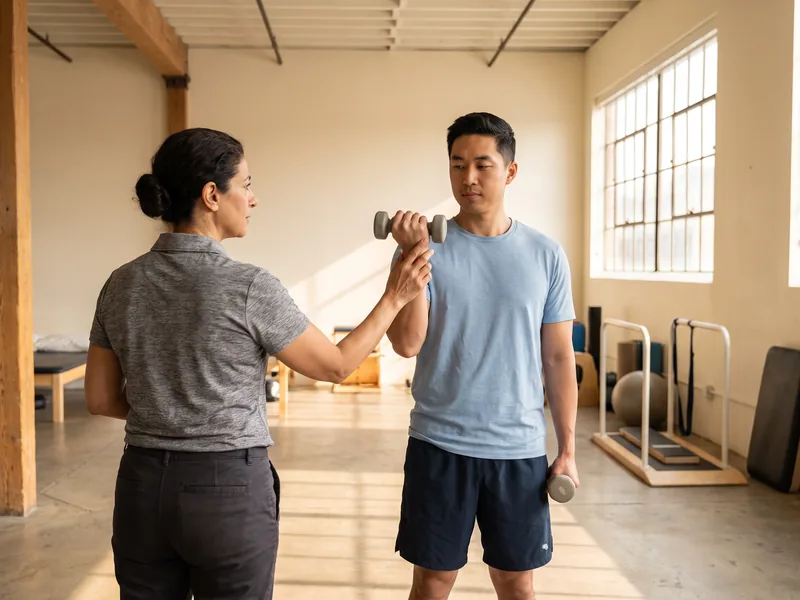
Physical therapy is one of the most important parts of stroke recovery because it directly targets the mobility, strength, and independence a stroke can take away. That means range of motion work to prevent stiffness, strengthening to rebuild what weakened, balance and gait training to reduce fall risk, and functional practice on the real tasks of daily life, dressing, walking, reaching, so progress shows up where it matters most.
The Honest Truth
Recovery timelines vary from person to person. What doesn’t vary is that starting sooner gives you more to work with.
How We Fix It
Every recovery is different, and timelines vary person to person. Here’s the general shape those four phases take after a stroke.
Weeks 1–2
Pain
Gentle range of motion, positioning, and fall-risk reduction protect what you have and prevent stiffness from setting in.
Weeks 2–6
Prime
Active range of motion, gait training, and balance work rebuild the movement patterns the stroke disrupted.
Weeks 6–10
Perform
Progressive strengthening and functional task training, dressing, walking, reaching, close the gap toward doing things on your own again.
Weeks 10+
Prevent
Continued progress supports getting back to the activities and routines that matter to you. Recovery trajectories vary and aren’t guaranteed on a fixed timeline, but this is the direction we’re always working toward.
Over 625 five-star reviews from patients who came to us with real, specific problems, not generic complaints. See what people are saying before your first visit.
5.0 rating · 625+ Google reviews
Phase 1: focused on safety, gentle movement, and preventing stiffness
Phase 4: regaining as much independence and function as possible
Questions, Answered
As soon as your physician clears you for it, whether that’s still in a hospital or rehab setting or after you’re home. Earlier, guided movement generally supports better outcomes than waiting, because it helps prevent the stiffness, weakness, and deconditioning that can set in when the affected side isn’t used. If you’re not sure whether it’s the right time, bring us your discharge paperwork and we’ll help you figure out the next step.
We can’t promise a specific outcome, and it wouldn’t be honest if we did: recovery after a stroke varies widely depending on the individual, the severity, and the location of the damage. What we can promise is a personalized plan built around your specific goals, whether that’s walking independently, using your hand again for daily tasks, or simply regaining as much function as possible, and consistent, honest updates on your progress along the way.
It depends on where you are in recovery, but sessions typically combine a few things: range of motion and strengthening exercises for the affected side, balance and gait training to help you move more confidently, and functional practice on real tasks like dressing, reaching, or standing up from a chair. Some patients also benefit from electrical stimulation to help re-activate weaker muscles. Every session is one-on-one and built around what you specifically need to work on that day.
Book Your Visit
Request a time and a real person calls you back, usually within two business hours. No phone tree. No ‘someone will reach out.’ Just a plan.
5.0 · 625+ Google reviews
Typical response: under 2 business hours
Step 1 of 5
That’s the hard part done. We’ll call during business hours to lock in your time. Most people are on the schedule same week.
Visit Us
We’re growing. See open positions and how to apply