
Weeks 1–2
Pain
Make it safe to move.
We identify your fall risk and immediate safety needs first, and address any pain or protective guarding that’s changing how you move.
What We Treat
Grabbing the counter just to feel steady standing up. Walking slower than you used to, without ever really deciding to. Balance and gait problems have real, findable causes, and a comprehensive evaluation is how we find yours.
No referral needed. A real person calls you back, usually within two business hours.
Request sent.
That’s the hard part done. We’ll call during business hours to lock in your time. Prefer to talk now? (816) 607-7180
Sound Familiar?
Two or more? Keep reading.
Why It Happens
Balancing and holding yourself steady draws on your muscles, ligaments, tendons, joints, inner ear, and cognitive function all working together, so a problem with any one of them, or several at once, can throw off your balance or the way you walk. It’s frequently traced back to surgery, a stroke, a cardiac event, an illness, or another injury that changed how your body moves.
An injury in one spot rarely stays isolated. Lean on one leg to protect an achy knee, and your hip and ankle start absorbing the extra load, and often start hurting too. A physical therapist does the detective work most people can’t do on their own, a comprehensive exam that finds not just where the imbalance shows up, but what’s actually causing it.
The Honest Truth
Nobody regrets starting too early. Every week, someone in our clinic says they regret waiting.
How We Fix It
Every plan has an endpoint. Here’s what the four phases look like for balance and gait.
Weeks 1–2
Pain
We identify your fall risk and immediate safety needs first, and address any pain or protective guarding that’s changing how you move.
Weeks 2–6
Prime
Targeted stretching rebuilds the flexibility lost to inactivity, aging, or a prior surgery that’s been throwing off your gait.
Weeks 6–10
Perform
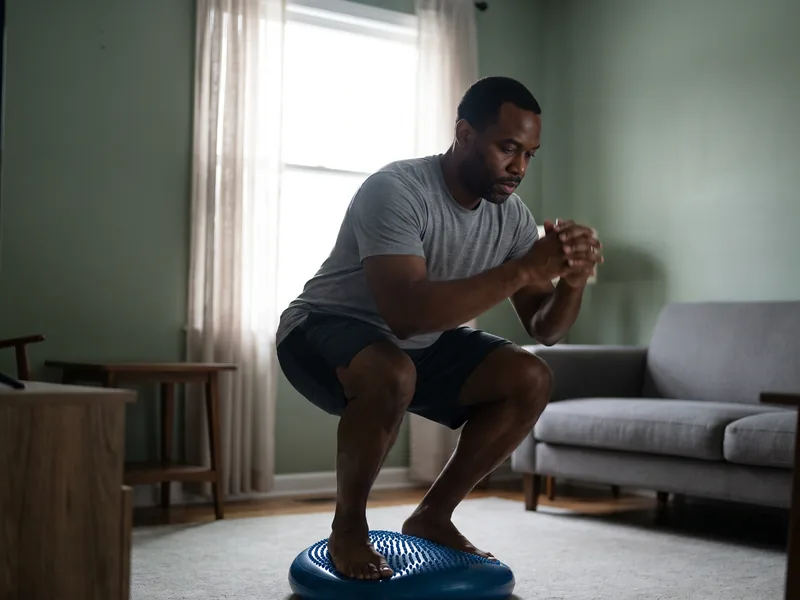
Targeted strengthening for weak muscles and balance-specific exercises retrain your body’s stability system, sometimes paired with custom orthotics to correct your stance.
Weeks 10+
Prevent
We test your balance and gait under real-world conditions, stairs, uneven ground, distractions, before calling it done. For many patients, that means finally setting the cane or walker aside.
Over 625 five-star reviews from patients who came to us with real, specific problems, not generic complaints. See what people are saying before your first visit.
5.0 rating · 625+ Google reviews
Phase 1: focused on immediate safety and fall risk
Phase 4: walking with confidence again
Questions, Answered
There are a lot of possible causes: weakness, lost flexibility, an inner ear issue, a prior surgery, a stroke, an illness, or another injury that changed your movement pattern. A comprehensive physical therapy exam is how we find which one, or which combination, applies to you.
For some patients, yes. As your strength, balance, and gait improve, you may be able to reduce or eliminate your need for a mobility aid. How far you progress depends on the underlying cause, which is exactly what your evaluation is built to find.
Not for everyone. When the issue is how your foot contacts the ground, custom orthotics can correct your stance and produce a noticeable chain-reaction improvement through your posture and gait. We only recommend them when your evaluation shows they’ll actually help.
Book Your Visit
Request a time and a real person calls you back, usually within two business hours. No phone tree. No ‘someone will reach out.’ Just a plan.
5.0 · 625+ Google reviews
Typical response: under 2 business hours
Step 1 of 5
That’s the hard part done. We’ll call during business hours to lock in your time. Most people are on the schedule same week.
Visit Us
We’re growing. See open positions and how to apply