
Weeks 1–2
Pain
Calm the inflamed tissue.
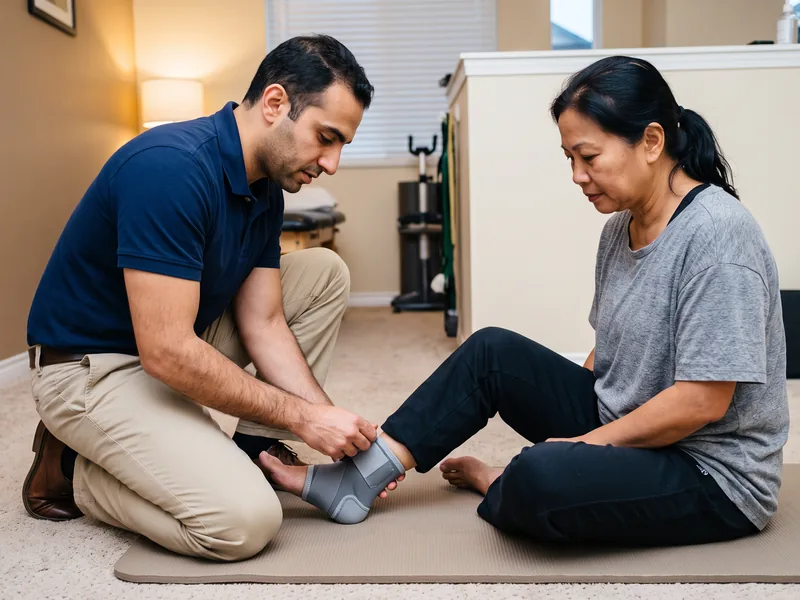
Hands-on techniques and taping reduce inflammation and take pressure off the irritated tissue, starting your first visit.
What We Treat
The stabbing first step out of bed. The ankle that still doesn’t feel steady on uneven ground. It’s fixable, and it starts with finding out exactly which tissue is actually irritated.
No referral needed. A real person calls you back, usually within two business hours.
Request sent.
That’s the hard part done. We’ll call during business hours to lock in your time. Prefer to talk now? (816) 607-7180
Sound Familiar?
Two or more? Keep reading.
Why It Happens
You put an enormous amount of load through your feet every single day, so pain here rarely comes out of nowhere. Fallen arches develop when the tendons supporting your foot stop pulling together the way they should. Plantar fasciitis inflames the connective tissue on the bottom of the foot, often from standing for long periods or wearing shoes without enough arch support. Tarsal tunnel syndrome pinches the nerve running from ankle to foot, arthritis wears down the joint cartilage, and a sprain or strain from a sudden twist can leave lingering instability long after the initial pain fades.
A thorough exam sorts out which of these is actually driving your pain, since a fracture, a tendon issue, and fasciitis can all feel similar at first. Once we know the real source, your plan targets it directly instead of guessing with rest and ice alone.
The Honest Truth
Nobody regrets starting too early. Every week, someone in our clinic says they regret waiting.
How We Fix It
Every plan has an endpoint. Here’s what the four phases look like for foot and ankle pain.
Weeks 1–2
Pain
Hands-on techniques and taping reduce inflammation and take pressure off the irritated tissue, starting your first visit.
Weeks 2–6
Prime
Targeted mobility work restores motion in the foot and ankle and corrects the walking pattern that’s been compensating for the pain.
Weeks 6–10
Perform
Balance board work and progressive strengthening rebuild the stability your foot and ankle need to trust every step.
Weeks 10+
Prevent
Footwear and, when needed, orthotic guidance get set before you’re cleared to return fully to standing, walking, or running.
Over 625 five-star reviews from patients who came to us with real, specific problems, not generic complaints. See what people are saying before your first visit.
5.0 rating · 625+ Google reviews
Phase 1: focused on calming pain and protecting the area
Phase 4: back to the activities that matter to you
Questions, Answered
Sometimes, but not always, and it’s not the first thing we reach for. We start with a thorough exam to find out what’s actually causing your pain, then build a plan around manual therapy, mobility work, and strengthening. If orthotic footwear or a lifestyle change would genuinely help prevent future problems, we’ll recommend it as part of that plan, not as a stand-alone fix.
It depends on the injury. If it’s a fresh, acute injury, we’ll usually start with rest, ice, compression, and elevation for a few days to let swelling settle before progressing to active treatment. For a chronic issue like fasciitis or tendinitis, total rest often isn’t necessary, and appropriately dosed movement actually speeds up recovery. Either way, an evaluation tells you which category you’re in.
It depends heavily on the specific cause and how long you’ve had it, but a full plan for foot or ankle pain typically runs through all four phases, Pain, Prime, Perform, and Prevent, over about 8–10 weeks. You’ll always know which phase you’re in and what’s left before you’re cleared to go all-in again.
Book Your Visit
Request a time and a real person calls you back, usually within two business hours. No phone tree. No ‘someone will reach out.’ Just a plan.
5.0 · 625+ Google reviews
Typical response: under 2 business hours
Step 1 of 5
That’s the hard part done. We’ll call during business hours to lock in your time. Most people are on the schedule same week.
Visit Us
We’re growing. See open positions and how to apply