
Weeks 1–2
Pain
Calm the joint down.
Hands-on techniques and activity modification reduce irritation and swelling around the affected joint.
What We Treat
Your hips and knees are the largest joints in your body, and pain in one often changes how you move at the other.
No referral needed. A real person calls you back, usually within two business hours.
Request sent.
That’s the hard part done. We’ll call during business hours to lock in your time. Prefer to talk now? (816) 607-7180
Sound Familiar?
Two or more? Keep reading.
Why It Happens
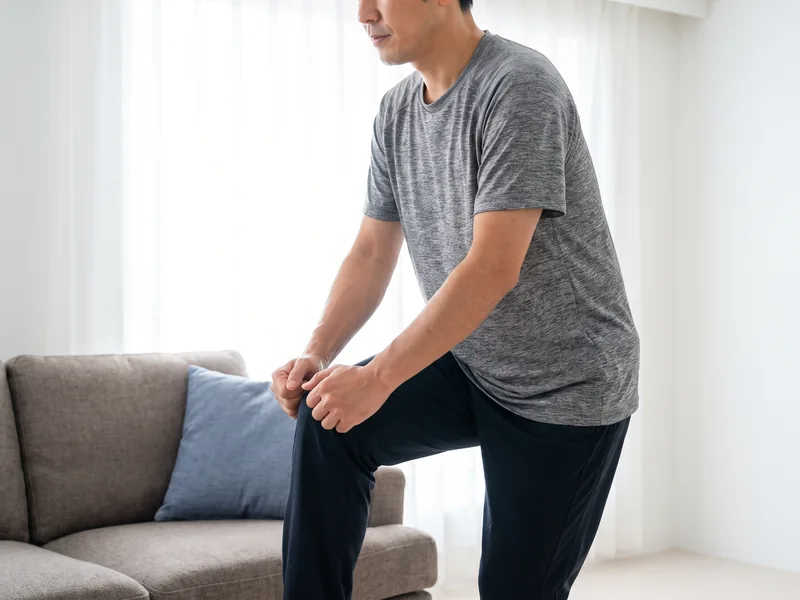
The hip joint can wear down over time from age, overuse, or a fall, and conditions like bursitis, tendinitis, and arthritis all add to the load. Knee pain often follows the same pattern: damage to the bony structures, ligaments, or cartilage from normal aging or overuse.
Because the hip and knee share so much of the work of walking and standing, pain or weakness in one joint frequently shows up as compensation, and eventual pain, in the other. A full lower-body evaluation looks at both together, not just the joint that hurts most.
The Honest Truth
Nobody regrets starting too early. Every week, someone in our clinic says they regret waiting.
How We Fix It
Every plan has an endpoint. Here’s what the four phases look like for hip and knee pain.
Weeks 1–2
Pain
Hands-on techniques and activity modification reduce irritation and swelling around the affected joint.
Weeks 2–6
Prime
Targeted mobility work addresses stiffness in the hip, knee, or both, wherever it's limiting you.
Weeks 6–10
Perform
Progressive strengthening around the hip and knee shares the load more evenly so neither joint overcompensates.
Weeks 10+
Prevent
Stairs, squatting, and daily movement get tested under real load before you're cleared to go all-in.
Over 625 five-star reviews from patients who came to us with real, specific problems, not generic complaints. See what people are saying before your first visit.
5.0 rating · 625+ Google reviews
Phase 1: favoring one leg on every set of stairs
Phase 4: back to walking, standing, and climbing stairs without thinking about it
Questions, Answered
Yes, very common. The hip and knee share so much of the work of walking that weakness or restriction in one often shows up as pain in the other. That's why we evaluate both together.
Not usually as a first step. A movement-based evaluation often finds the mechanical driver of your pain directly. If imaging becomes genuinely necessary, we'll help you get it.
Not necessarily. Many hip and knee pain cases improve significantly with targeted physical therapy. If surgery is already planned or ultimately needed, pre- and post-surgical therapy still make a real difference in your recovery.
Book Your Visit
Request a time and a real person calls you back, usually within two business hours. No phone tree. No ‘someone will reach out.’ Just a plan.
5.0 · 625+ Google reviews
Typical response: under 2 business hours
Step 1 of 5
That’s the hard part done. We’ll call during business hours to lock in your time. Most people are on the schedule same week.
Visit Us
We’re growing. See open positions and how to apply