
Weeks 1–2
Pain
Calm the jaw down.
Manual therapy and gentle exercises reduce muscle tension and pain around the jaw joint.
What We Treat
Jaw pain, popping, and headaches that trace back to the joint connecting your jaw to your skull. Physical therapy can help calm it down.
No referral needed. A real person calls you back, usually within two business hours.
Request sent.
That’s the hard part done. We’ll call during business hours to lock in your time. Prefer to talk now? (816) 607-7180
Sound Familiar?
Two or more? Keep reading.
Why It Happens
The temporomandibular joint connects your jaw to your skull, and dysfunction here can come from injury, misalignment of the teeth, chronic gum chewing, arthritis, or teeth grinding. Because the joint is made up of bones, tendons, and muscles working together, pain can show up on one or both sides.
Diagnosis often involves ruling out other conditions with similar symptoms, and treatment frequently combines dental input with physical therapy targeting the muscles and mechanics around the jaw, since muscle tension and posture play a real role in how the joint moves.
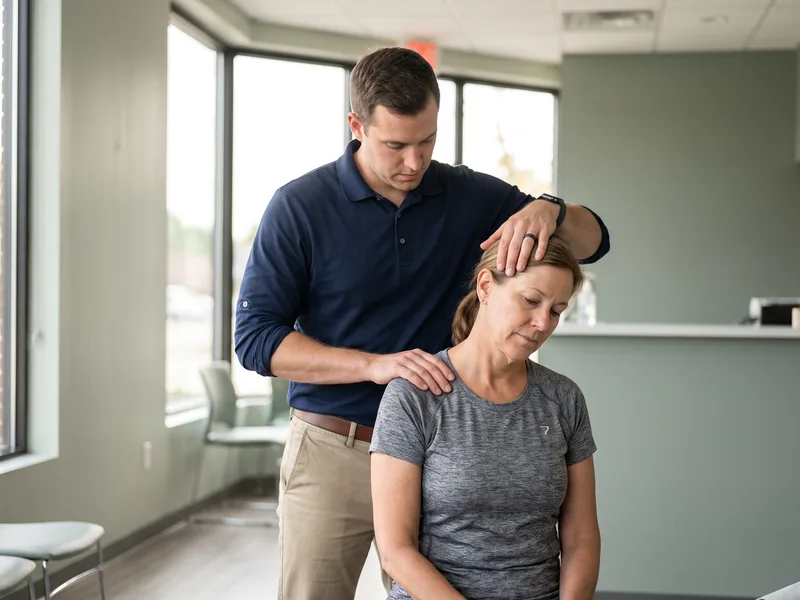
The Honest Truth
Nobody regrets starting too early. Every week, someone in our clinic says they regret waiting.
How We Fix It
Every plan has an endpoint. Here’s what the four phases look like for TMJ dysfunction.
Weeks 1–2
Pain
Manual therapy and gentle exercises reduce muscle tension and pain around the jaw joint.
Weeks 2–6
Prime
Targeted mobility work addresses restricted opening or asymmetrical movement.
Weeks 6–10
Perform
Specific exercises correct imbalances between the muscles on each side of the jaw.
Weeks 10+
Prevent
Posture, habits, and self-management strategies help keep symptoms from coming back.
Over 625 five-star reviews from patients who came to us with real, specific problems, not generic complaints. See what people are saying before your first visit.
5.0 rating · 625+ Google reviews
Phase 1: unable to fully open your mouth without pain or popping
Phase 4: eating, talking, and moving your jaw without the tension or headaches
Questions, Answered
Often both work together. A dentist addresses alignment and may provide a splint, while physical therapy addresses the muscle tension and joint mechanics contributing to your symptoms.
It can often reduce clicking and the associated pain by improving muscle balance and joint mechanics, though some clicking without pain may not need active treatment.
Many patients see improvement within 4 to 6 visits, though timelines vary depending on how long the dysfunction has been present and its underlying cause.
Book Your Visit
Request a time and a real person calls you back, usually within two business hours. No phone tree. No ‘someone will reach out.’ Just a plan.
5.0 · 625+ Google reviews
Typical response: under 2 business hours
Step 1 of 5
That’s the hard part done. We’ll call during business hours to lock in your time. Most people are on the schedule same week.
Visit Us
We’re growing. See open positions and how to apply